
Grant County Probate Division
Grant County probate matters are heard in Grant County District Court as part of Minnesota's unified trial court system. The state court page says District Court has original jurisdiction in probate cases filed in Grant County. The county Court Administration page says District Court judges hear probate and conciliation matters and that Court Administration is keeper of records for all case types filed in Grant County.
No separate probate court was located in official research. Probate records therefore route through MCRO and Grant County Court Administration at the courthouse. The local court is part of the Eighth Judicial District and handles probate along with civil, family, juvenile, criminal, traffic, and conciliation matters.
Grant County District Court
10 Second Street NE
Elbow Lake, MN 56531
218-685-7675
General court hours 8:00 a.m.-4:30 p.m. per MJB
Grant County Court Administration
10 2nd St. NE
Elbow Lake, MN 56531
218-685-7675
County counter hours 8:00 a.m.-4:00 p.m.
Grant County Probate Terms
Probate files use terms that describe the person who died, the person asking for authority, the property at issue, and protected-person proceedings. These definitions help read MCRO results and court documents without changing the legal effect of the record.
- Testator
- Person who made a will.
- Personal representative
- Person appointed to manage estate administration; often called executor in common use.
- Intestate
- Dying without a valid will.
- Guardianship
- Court case about personal care or decision-making for a protected person.
- Conservatorship
- Court case about management of a protected person's money or property.
- Interested person
- Heir, devisee, creditor, representative, or other person with a legally recognized interest.
Search Grant County Probate Records
MCRO is the central online channel for Grant County probate searches. Use Case Search when the party, decedent, interested person, or filing date is known. Use Document Search when the exact probate case number is known. Use Hearing Search for probate hearing dates. The daily calendar examples found in research included probate hearings and probate case numbers such as 26-PR-26-80.
- Open MCRO Case Search.
- Select Probate or Mental Health under Case Category if using category filters.
- Set Court Locations to Grant County to avoid statewide results.
- Search by case number when available because probate name searches can involve decedents, heirs, personal representatives, or interested persons.
- Use MCRO Document Search for public documents when the case number is known.
- Contact Court Administration for certified copies or files not available remotely.
The MCRO overview is one successful image source for Grant County probate records.
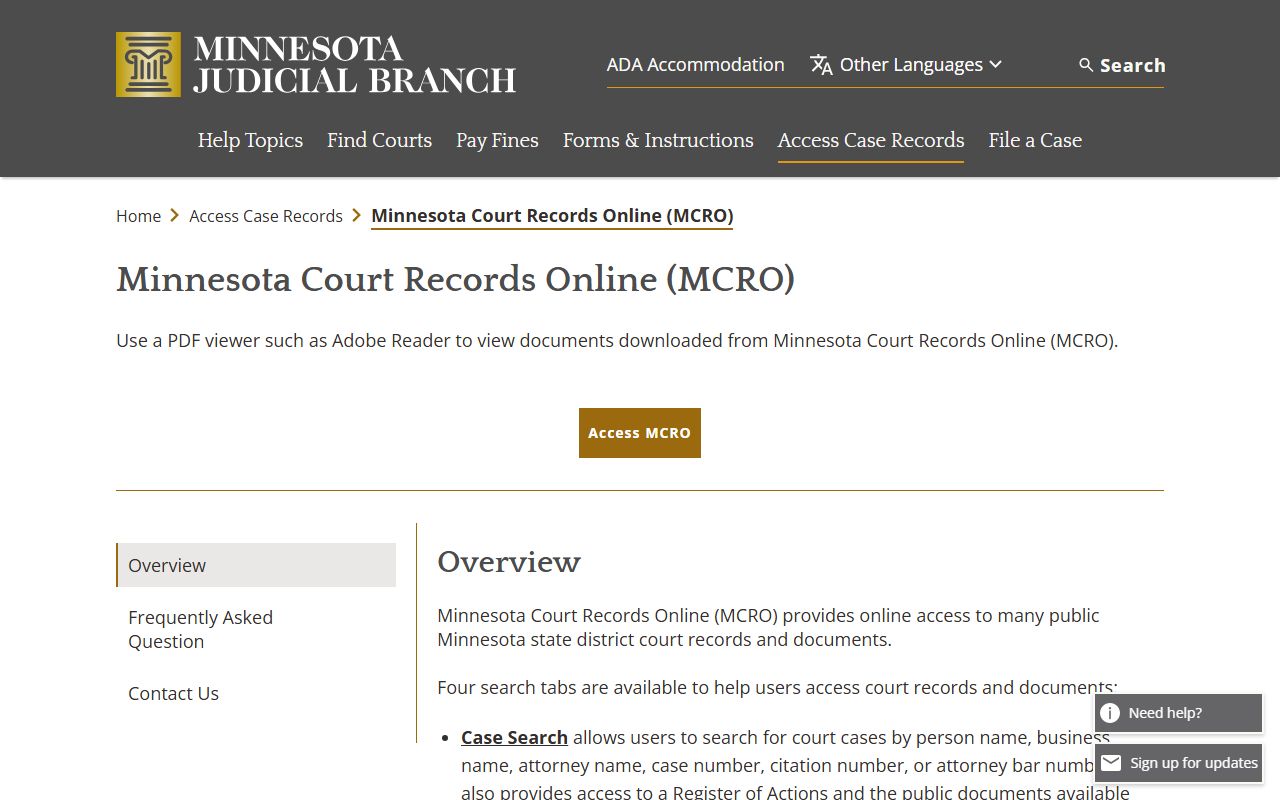
MCRO can show online probate access paths, but Court Administration remains the certified-copy office.
Grant County Probate Search Fields
Probate searches can be less direct than criminal or traffic searches because several people may be tied to one estate or guardianship. The case number is the most precise key. When using names, account for the decedent, petitioner, personal representative, ward, protected person, or interested party.
| Field Label | Type | Required | Options / Format Notes |
|---|---|---|---|
| Search tab | Tabs | Yes | Name, Case Number, Citation Number, Attorney |
| Last / First / Middle Name | Text | Optional | Search decedent or party/interested person; wildcard after two characters. |
| Date Filed | Date | Optional | Exact or range. |
| Case Category | Checkbox | Optional | Select Probate or Mental Health. |
| Case Status | Radio | Optional | All, Active, Inactive. |
| Court Locations | County selector | Optional | Select Specific County Court Locations, then Grant. |
Grant County Probate Documents
Probate records may include petitions, wills, codicils, statements that no will is known, decedent information, heirs, devisees, appointment orders, letters, bonds, inventories, creditor notices, claims, objections, accountings, receipts, distributions, closing statements, and decrees. Guardianship and conservatorship cases may add annual reports, inventories, accountings, and protective orders.
MCRO document coverage is especially useful for probate. The MCRO overview says public documents filed on or after July 1, 2015 can be accessed or downloaded for Formal Probate, Other Probate, Guardianship and Conservatorship, and Trust case types. That does not make MCRO copies certified. Certified probate copies must be obtained from Grant County Court Administration.
MCRO Document Search is a successful manifest source for Grant County probate records.
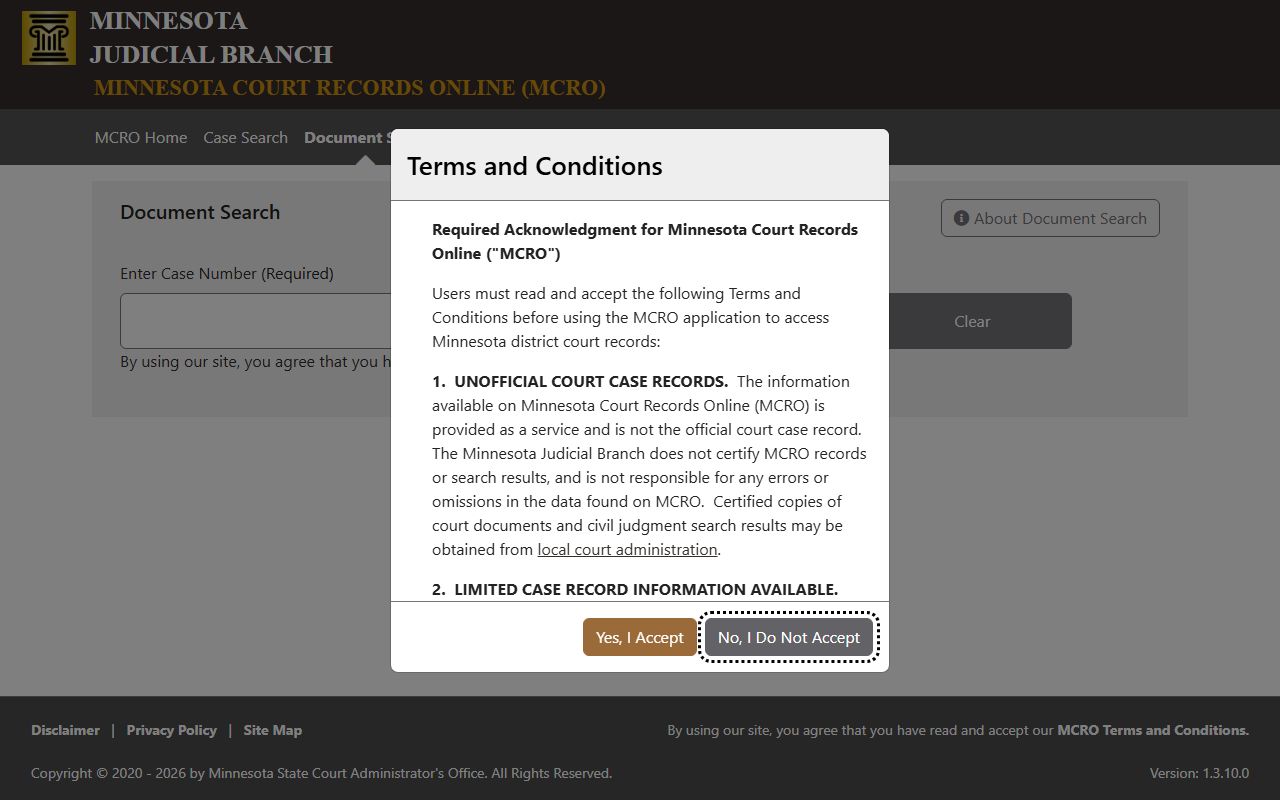
Document Search is strongest when the Grant County probate case number is already known.
Grant County Probate Fees
Grant County probate filing fees were not located in local official sources in the research. The page should not borrow Recorder fees for District Court probate filings because those are different offices and different record systems. Court Administration or the Minnesota Judicial Branch court fee schedule should be used before payment.
| Item | Amount | Source Status |
|---|---|---|
| Probate filing fee | Not located locally | Confirm with Court Administration or state fee schedule. |
| Certified probate copy | Not located locally | Certified copies come from Court Administration. |
| Recorder recording fees after probate | May apply separately | Only if estate documents must be recorded with the Recorder. |
Small Estate Probate Note
Minnesota Statutes section 524.3-1201 covers collection of personal property by affidavit when statutory conditions are met. This can matter when a full probate case is not required. It is not legal advice and does not decide whether a Grant County estate qualifies. Court forms, Court Administration, or counsel should be used for case-specific decisions.
Restricted Grant County Probate Records
Some probate and probate-adjacent records may be limited. Guardianship, conservatorship, mental health, minor, financial, medical, and protected-person information can be redacted or restricted by rule, statute, or court order. MCRO also states that public documents in civil commitment case types are not available remotely, even though some courthouse access may exist.
For public but courthouse-only probate records, contact Court Administration. For certified copies, use the same office. For recorded real estate documents connected to an estate, the Recorder may be a separate later step, but the probate case file remains a District Court record.
Grant County Probate Routing
Probate often touches more than one local records counter. The case itself belongs to Grant County District Court and Court Administration. The will, petition, letters, inventory, accounting, order, or guardianship report is a court case document when filed in the probate case. A later deed, transfer document, or other recorded instrument belongs to the Recorder after it is recorded. The research supports this office split, so probate users should not treat Recorder searches as a substitute for the District Court probate file.
MCRO is strongest when a user already knows a case number. A probate case number may include PR, as seen in Grant County calendar examples. Document Search requires the exact case number. Hearing Search can help find scheduled probate hearings, but the calendar does not include every matter handled by the court each day. Confidential cases and matters not remotely accessible under Rule 8 are not posted.
| Probate Need | First Channel | Fallback |
|---|---|---|
| Find an estate case | MCRO Case Search with Grant filter | Court Administration by phone or counter |
| Download public probate documents | MCRO Document Search by case number | Court Administration for unavailable records |
| Confirm hearing date | MCRO Hearing Search or daily calendar | Court Administration if missing or unclear |
| Certified probate copy | Court Administration | MCRO cannot certify records |
| Record real estate after probate | Recorder after proper court documents exist | Do not confuse recording fees with probate filing fees |
Read Grant County Probate Records
A probate record should be read by sequence. The petition or application shows what relief is requested and who is asking. A will or no-will statement helps identify whether the estate is testate or intestate. Appointment orders and letters show who has authority to act. Inventory, notice, claims, and accounting documents show estate administration. Closing documents or decrees show how the court resolved the estate, when public and available.
Guardianship and conservatorship files follow a different pattern because they concern a protected person rather than a decedent's estate. Annual reports, inventories, accountings, and protective orders may be public, restricted, or redacted depending on the record. Court Administration is the best source when MCRO shows the case but not the document needed.
Grant County Probate Copies
Certified probate copies should be requested from Court Administration because MCRO results and downloads are not certified. This matters for letters, appointment orders, decrees, and other documents that may be presented to financial institutions, title companies, government agencies, or other courts. If the probate document must later be recorded with the Grant County Recorder, confirm both the court-copy requirement and the recording requirement before ordering.
Probate users should also watch the date and case type. MCRO's strong probate document availability applies to public documents filed on or after July 1, 2015 for Formal Probate, Other Probate, Guardianship and Conservatorship, and Trust case types. Older files, restricted guardianship details, civil commitment documents, or redacted protected-person information may require direct Court Administration review.