
Grant County Arrest Records and Court Charges
Grant County arrest records are law-enforcement records created around an arrest, citation, booking, custody decision, or agency report. The Grant County Sheriff's Office handles law-enforcement duties, court security, prisoner transport, civil process, investigation, central records keeping, and enhanced 9-1-1 service. Arrest or booking data should be requested from the Sheriff's Office or checked through official custody channels when current jail status is the question.
Court charges after arrest are different. The Sheriff's Office or another agency may arrest or cite a person, but formal criminal charges are prosecuted through the County Attorney or another prosecuting authority and filed in Grant County District Court. Once filed, the charge record becomes part of the court case. The full case file, pleas, dispositions, and sentence are covered in Grant County criminal court records.
The Grant County Sheriff's Office page is the official local starting point for law-enforcement arrest-record context.
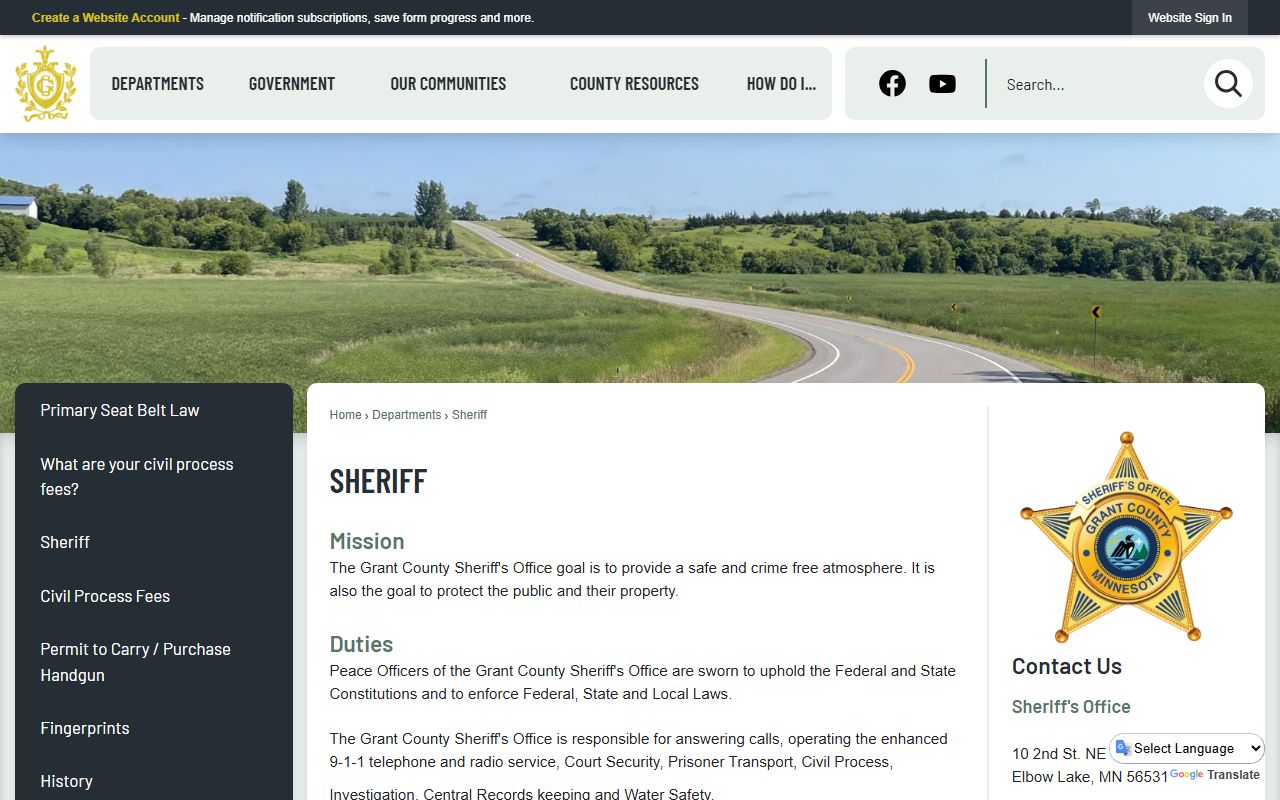
The Sheriff source connects arrest records to law-enforcement duties, while filed charges move into District Court case records.
Find Grant County Arrest Records
Start with the record type. For current custody or booking status, use the official county-linked jail roster and Sheriff contact. For filed charges, use MCRO Case Search and filter to Grant County. For certified copies of filed criminal charges or case documents, contact Grant County Court Administration. For prosecutor charging context, use the Grant County Attorney's Office.
- Check the Sheriff's Office or jail roster for arrest and custody information.
- Open MCRO Case Search for filed District Court charges.
- Search by case number, citation number, or defendant name with Grant County selected.
- Read each count, statute, severity level, bond entry, hearing, and disposition.
- Use Court Administration for certified court documents and courthouse-only records.
BCA Public Criminal History Search is a statewide conviction-history tool, not the court-charge record itself. It can differ from MCRO because dismissed charges, pending matters, sealed records, and expungement rules affect each system differently. MCRO also warns that pending criminal and traffic matters with no conviction may not return in defendant-name searches.
Charges Filed After Arrest
A charge record begins when the prosecutor files the formal allegation with the court. Minnesota counties have County Attorneys rather than District Attorneys. Grant County's official directory lists the County Attorney office at 18 E. Division St., P.O. Box 1014, Elbow Lake, MN 56531, phone 218-685-5353. The Data Practices Policy identifies Justin Anderson as County Attorney and responsible authority for that office.
| Complaint | Information | Indictment | |
|---|---|---|---|
| Filed By | Prosecutor, often based on agency reports. | Prosecutor. | Grand jury process where used. |
| Use | Common charging document for criminal cases. | Formal prosecutor-filed charge document. | Serious or grand-jury routed matters. |
| Record Role | Starts or supports the court case and charge list. | Defines counts for prosecution. | Defines indicted counts. |
The official Grant County Attorney directory identifies the local prosecuting office tied to many court charges after arrest.
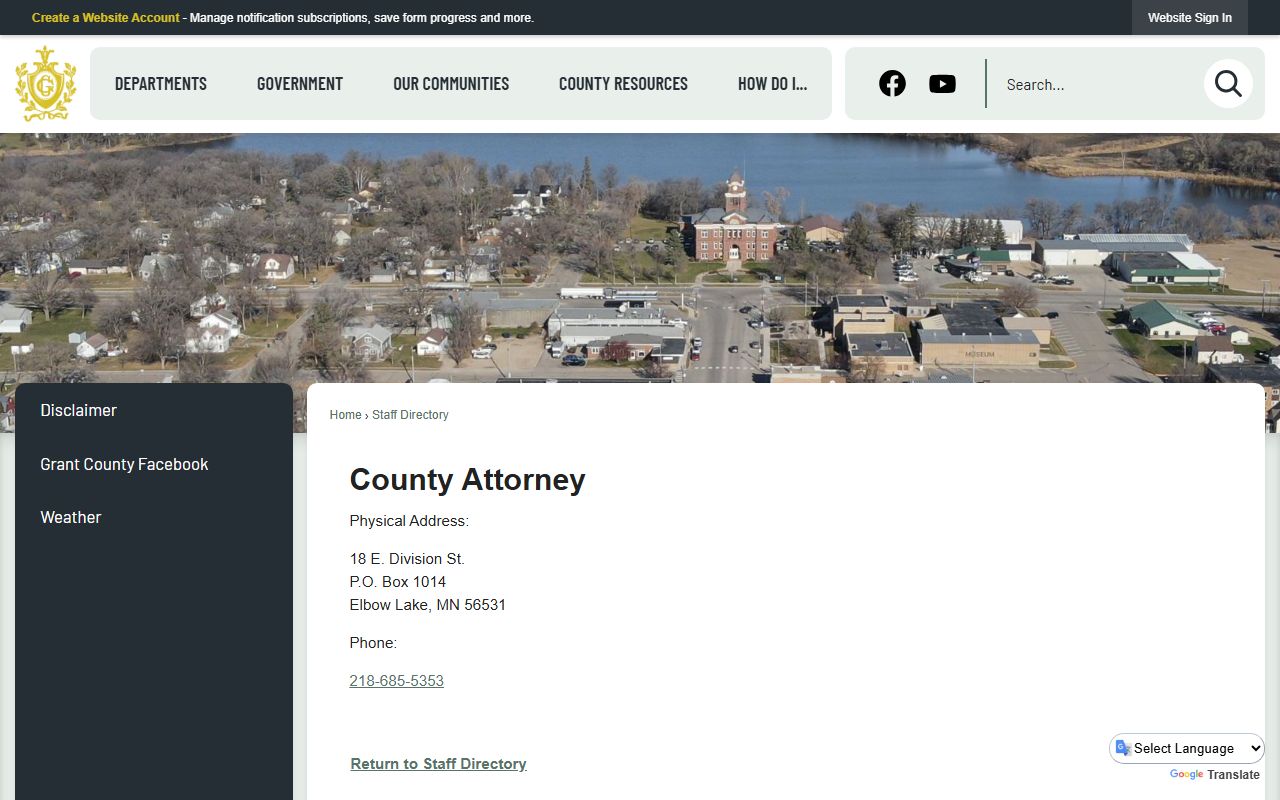
The County Attorney source helps separate arresting agency records from formal charging decisions and court filings.
Charge Status and What It Means
Charges can change after they are filed. A count may be amended, reduced, dismissed, added, or resolved by plea or trial. A single Grant County arrest can lead to more than one count, and each count may have a different result. Always compare the charge list to the disposition and sentencing entries before treating an accusation as a conviction.
| Status | What It Means |
|---|---|
| Pending | The charge is open and has not reached final disposition. |
| Amended | The charge language, count, statute, or level changed after filing. |
| Reduced | The charge was lowered as part of a plea, amendment, or court action. |
| Dismissed | The charge was ended without a conviction on that count. |
| Convicted | The court entered guilt by plea, verdict, or finding. |
Charges vs Convictions
An arrest and a charge do not prove guilt. A charge is the formal allegation filed after arrest or citation. A conviction is a court outcome after a guilty plea, verdict, or finding. Grant County court records may show both dismissed and convicted counts, so a person reading charges after arrest should find the disposition for each count.
| Charge | Conviction | |
|---|---|---|
| Stage | Filed allegation after arrest, citation, or complaint review. | Final court outcome after plea, verdict, or finding. |
| Meaning | May be amended, reduced, dismissed, or tried. | Shows guilt entered by the court. |
| Where to Check | Complaint, charge list, MCRO case details. | Disposition, sentence, and BCA conviction history where applicable. |
Sealed vs Expunged Charges
Sealing and expungement can affect arrest records, charge records, court files, BCA CHS, and local agency data in different ways. Minnesota chapter 609A governs criminal expungement. The research notes that BCA CHS had cannabis-related petty misdemeanor and misdemeanor records, plus certain felony records dismissed or resolved in the person's favor, expunged as of May 2024. Clean Slate automatic review also affects BCA and court visibility.
| Sealed | Expunged | |
|---|---|---|
| Public visibility | Hidden or limited for ordinary public searches. | Access is restricted under expungement authority. |
| Systems affected | May affect court and local agency access differently. | May affect MCRO, BCA CHS, sheriff records, jail data, and DOC records differently. |
| Grant County check | Confirm the court file with Court Administration. | Check BCA, court, and local records when each system matters. |
Charge Codes and Severity Levels
Grant County charges can list a statute, offense title, severity level, and count number. Minnesota severity labels include felony, gross misdemeanor, misdemeanor, and petty misdemeanor. A felony is a serious criminal offense category. A gross misdemeanor sits between misdemeanor and felony. A misdemeanor is lower-level criminal conduct. A petty misdemeanor is often traffic-related and is not treated the same as a crime. One arrest can produce multiple counts at different levels.
Charge codes should be read with the register of actions and disposition. MCRO warns that the case type is not always the final sentence level. A case may start with one charge level and end with a different plea or dismissal. If the charge line is needed for a legal filing, request certified copies from Court Administration rather than relying on a screenshot.
Statewide Charge and Criminal History Lookups
BCA CHS is the statewide public criminal-history source for Minnesota, while MCRO is the court-record source. BCA CHS requires first name, last name, and date of birth for public searches. It is best for conviction-history checks, not for every filed charge after arrest. MCRO is better for finding filed counts, docket activity, hearing dates, and court dispositions in Grant County District Court.
The U.S. Attorney's Office for the District of Minnesota is a federal prosecutor source and is separate from Grant County charges.
The federal prosecutor source helps distinguish local County Attorney charges from federal cases filed outside Grant County District Court.
Grant County Charge Record Limits
Arrest records, jail records, filed charges, and criminal-history reports can disagree because they come from different systems. A jail roster may show current custody. MCRO may show filed court charges. BCA CHS may show public conviction history. Sheriff records may include arrest or incident data governed by law-enforcement data rules. Clean Slate and expungement can further change what appears.
Important: A filed charge is not a conviction; read the disposition before relying on outcome information.
Restricted Grant County Charge Records
Juvenile charges, sealed or expunged matters, active investigative data, victim-identifying details, street addresses, protected-order cases, and some civil commitment-related records can be withheld from remote public access. MCRO excludes certain juvenile and child-protection case types and does not display OFP or harassment restraining order case types on the internet. Pending criminal and traffic cases with no conviction may not appear by defendant-name search.
For sheriff arrest data, use the Sheriff's Office and Grant County Data Practices process. For filed court charges, use MCRO and Court Administration. For prosecutor questions, contact the County Attorney. For appointed defense, use the Minnesota Board of Public Defense office locator rather than treating the public defender as a records-copy office.