
Grant County Criminal Court Records
A Grant County criminal court record begins when a criminal complaint, citation, or other charging document is filed in Grant County District Court. The file is maintained by Court Administration, which the county identifies as the keeper of records for all case types. The record follows the case from first appearance and arraignment through motions, plea, trial if any, disposition, sentencing, probation, fines, restitution, and later revocation or warrant events.
Grant County District Court is part of Minnesota's Eighth Judicial District and has original jurisdiction over criminal and traffic cases filed in the county. Minnesota does not route Grant County criminal matters through a separate county court, justice court, or municipal court in the official structure found in the research. That unified court model makes MCRO and Court Administration the main case-record access points.
Formal charge details are related but narrower than the full case file. The Grant County arrest records and court charges page focuses on the arrest-to-charge path, while criminal court records follow the entire court case and final outcome.
Search Grant County Criminal Cases
Use MCRO Case Search for public Grant County criminal case records. Search by defendant name, case number, citation number, or attorney, then use the Grant County court-location filter. MCRO can show case details, register-of-actions entries, hearing history, public documents available online, and disposition information when public and remotely accessible.
- Open MCRO Case Search and choose name, case number, citation number, or attorney search.
- Filter court locations to Grant County when searching statewide results.
- Open the case details and read the register of actions before relying on one charge line.
- Check disposition and sentence entries separately because charges can be amended, dismissed, or resolved differently.
- Request certified copies from Grant County Court Administration when an official record is needed.
MCRO warns that pending criminal, traffic, and petty misdemeanor cases with no conviction will not return in defendant-name searches, though they may return by case number. This is a major Grant County criminal court records caveat. If a citation or complaint number is available, use it. If a record is needed for official use, call Court Administration at 218-685-7675.
BCA Public Criminal History Search is a separate statewide source, not the Grant County court file.
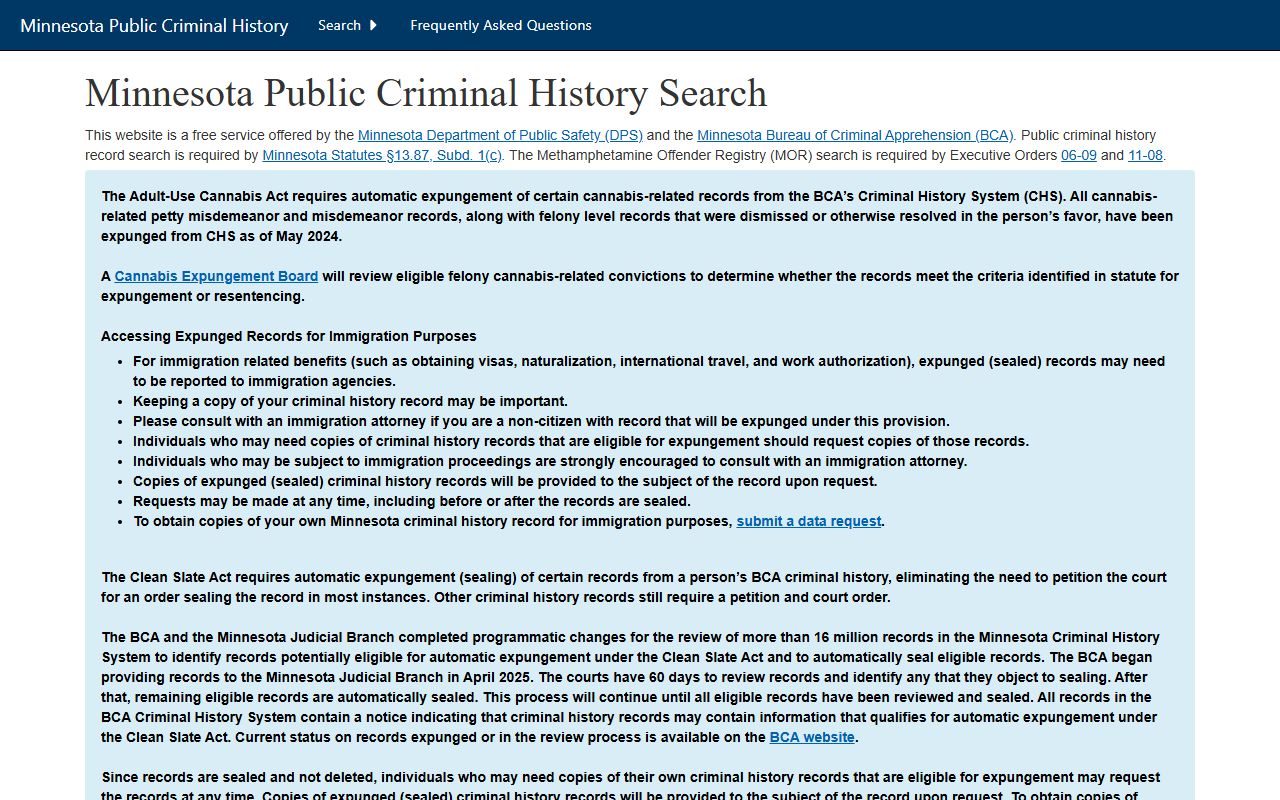
The BCA source can help with conviction-history research, but it does not replace MCRO or certified court copies from Court Administration.
Stages of a Criminal Case
A Grant County criminal case record should be read as a timeline. The charge starts the case, but later entries may change the charge, continue a hearing, resolve a count, impose probation, order restitution, issue a warrant, or close the case. One arrest can lead to several counts, and each count may have its own disposition.
Case flow: Charges Filed › Arraignment › Pretrial / Motions › Plea or Trial › Disposition › Sentencing
| Stage | What Happens |
|---|---|
| Charges Filed | A complaint, citation, or charging document opens the criminal case. |
| Arraignment | The defendant appears, charges are addressed, and plea or release issues may be handled. |
| Pretrial / Motions | The docket may show motions, hearings, continuances, discovery events, or bail issues. |
| Plea or Trial | The record may show a plea, verdict, dismissal, acquittal, or amended charge resolution. |
| Disposition | The outcome is entered for the case or for each count. |
| Sentencing | The court may impose jail, prison, probation, fines, surcharges, restitution, or conditions. |
What Grant County Criminal Records Show
Criminal court records can contain more than an offense title. They may show statutory citations, severity levels, bail or bond conditions, warrant activity, sentencing condition comments, financial obligations, and probation or revocation events. MCRO terms also caution that case type is not always the final level of sentence, so the disposition and sentence entries should be read together.
| Field | What It Shows |
|---|---|
| Case Number | The District Court file number used for exact lookup and certified-copy requests. |
| Defendant | The person charged in the criminal case, with remote address data withheld. |
| Charges | Counts, offense names, statutory citations, severity levels, and charge changes when entered. |
| Bail or Bond | Release amount, conditions, or related hearing entries when public. |
| Plea | The defendant's response, such as guilty or not guilty, if posted. |
| Disposition | The outcome for a case or count, including conviction, dismissal, acquittal, or amended resolution. |
| Sentence | Custody, probation, fines, surcharges, restitution, or conditions ordered after conviction. |
| Warrant Events | Bench warrants, failures to appear, revocations, returns, or recall/quash entries when public. |
Charges vs Convictions
Being charged is not the same as being convicted. A Grant County criminal court record may show charges that were later dismissed, reduced, amended, or resolved through a plea to a different count. A conviction requires a guilty plea, verdict, or other court finding that results in a conviction entry. For outcome research, read each count and its disposition rather than treating the first charge line as the final result.
| Charge | Conviction | |
|---|---|---|
| Stage | Formal allegation filed in court. | Final outcome after plea, verdict, or finding. |
| Meaning | Accusation that may change or be dismissed. | Court-entered guilt or conviction outcome. |
| Where Seen | Complaint, citation, docket, and charge list. | Disposition, sentence, and BCA conviction history when reportable. |
Reading Dispositions and Sentences
A disposition is the outcome of a charge or case. It may show guilty, dismissed, acquitted, amended, or another court result. A sentence is the punishment or conditions ordered after conviction. In Grant County criminal court records, sentence information may include custody time, probation, fines, surcharges, restitution, and conditions. The financial section can show money owed, while later entries can show payments, probation issues, warrants, or revocation hearings.
- Arraignment
- An early criminal appearance where charges and plea issues are addressed.
- Disposition
- The current or final outcome of a charge or case.
- Restitution
- Payment ordered to compensate a victim.
- Probation
- Court-ordered supervision or conditions instead of, or after, custody.
Sealed vs Expunged Records
Sealed and expunged criminal records are restricted from ordinary public access. Minnesota chapter 609A governs expungement and sealing for qualifying records. Clean Slate and cannabis expungement changes also affect BCA CHS and court-record visibility. A person may see different results in MCRO, BCA CHS, sheriff records, jail records, DOC records, or probation records while sealing processes are applied across systems.
| Sealed | Expunged | |
|---|---|---|
| Public visibility | Hidden or limited for ordinary public searches. | Access is sealed or limited under expungement authority. |
| Criminal justice access | May remain available to certain agencies or by court order. | May remain available to criminal justice agencies or other authorized users. |
| Grant County action | Check Court Administration for the court file status. | Check MCRO, BCA CHS, and local agency records when each system matters. |
Minnesota chapter 609A is the core expungement chapter for criminal court records.
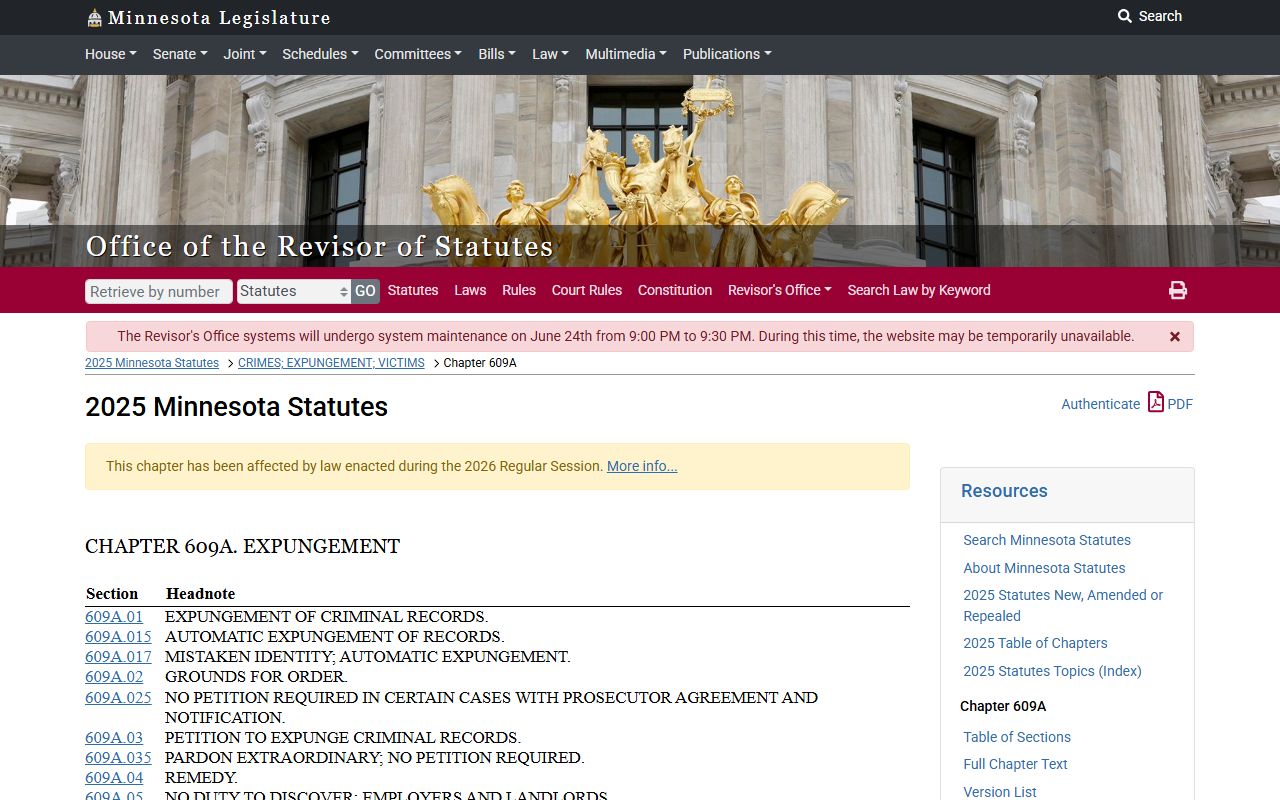
The expungement source matters because sealed court records and BCA criminal history can change under different processes.
Criminal Court Record Access
Criminal court access in Grant County follows the Minnesota Rules of Public Access to Records of the Judicial Branch. Rule 4 starts from accessibility unless a record is restricted by law, rule, or court order. Rule 8 controls inspection, copying, and remote access, which is why MCRO can omit public data that may exist at a courthouse terminal.
Key Statutes:
Minnesota Rules of Public Access Rule 4 - case records are accessible unless restricted by law, rule, or court order.
Minnesota Rules of Public Access Rule 8 - remote access is narrower than courthouse access.
Minnesota Statutes section 260B.171 - juvenile court records have special confidentiality rules.
Juvenile records are especially limited. MCRO excludes Child Protection and Juvenile Delinquency Felony 16 case types from remote access, and juvenile records may be limited to parties, attorneys, agencies, or court-authorized users.
Minnesota juvenile court records law is a key restriction source for criminal-record users.
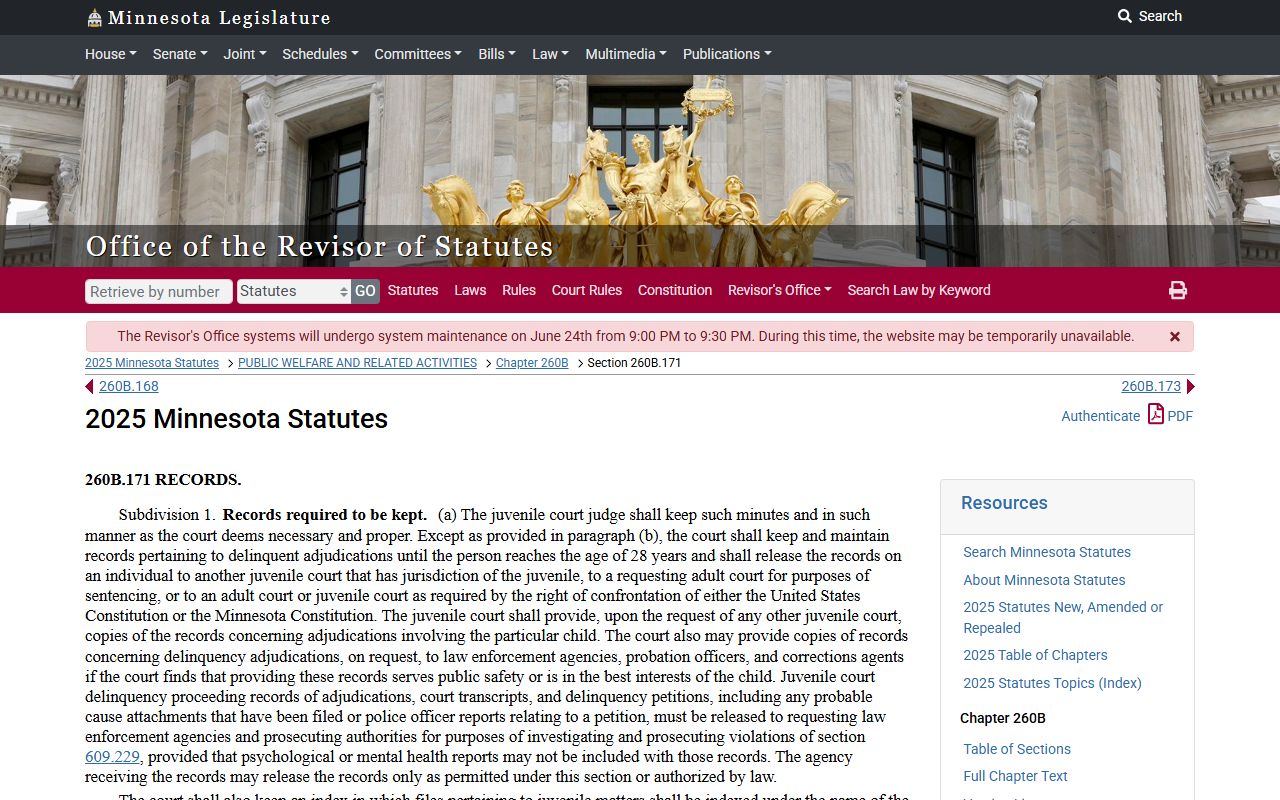
The juvenile source explains why some criminal-adjacent matters should not be expected in public name searches.
BCA History vs Court Records
BCA Public Criminal History Search is not the same as Grant County criminal court records. BCA CHS is designed for public criminal-history lookups and requires first name, last name, and date of birth. The BCA FAQ also notes in-person terminal access at BCA headquarters. MCRO is the court-record source for filed cases, registers of actions, public documents, and court dispositions. Use each system for its own purpose.
BCA CHS Search is useful when a statewide public criminal-history search is needed.
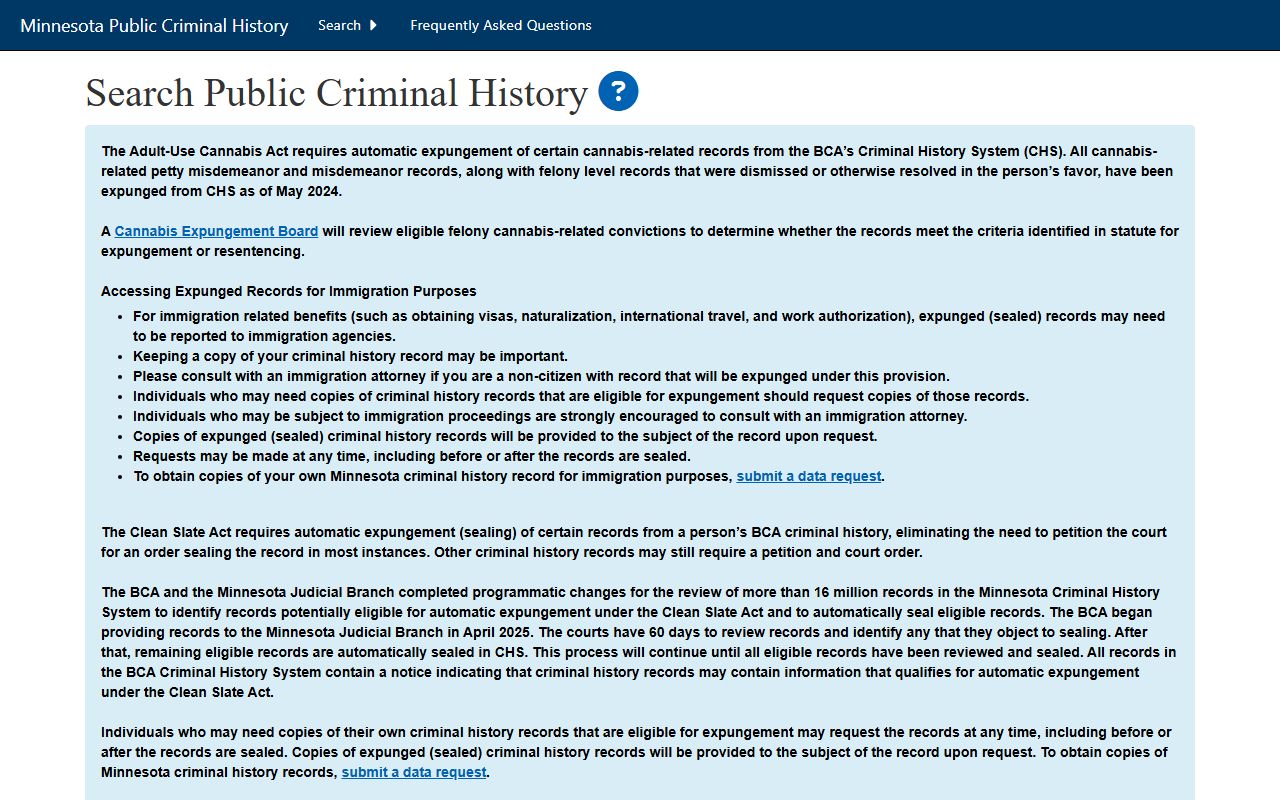
The BCA search image highlights the difference between a conviction-history lookup and a full Grant County District Court case file.
BCA CHS FAQ explains public criminal-history search requirements and limits.
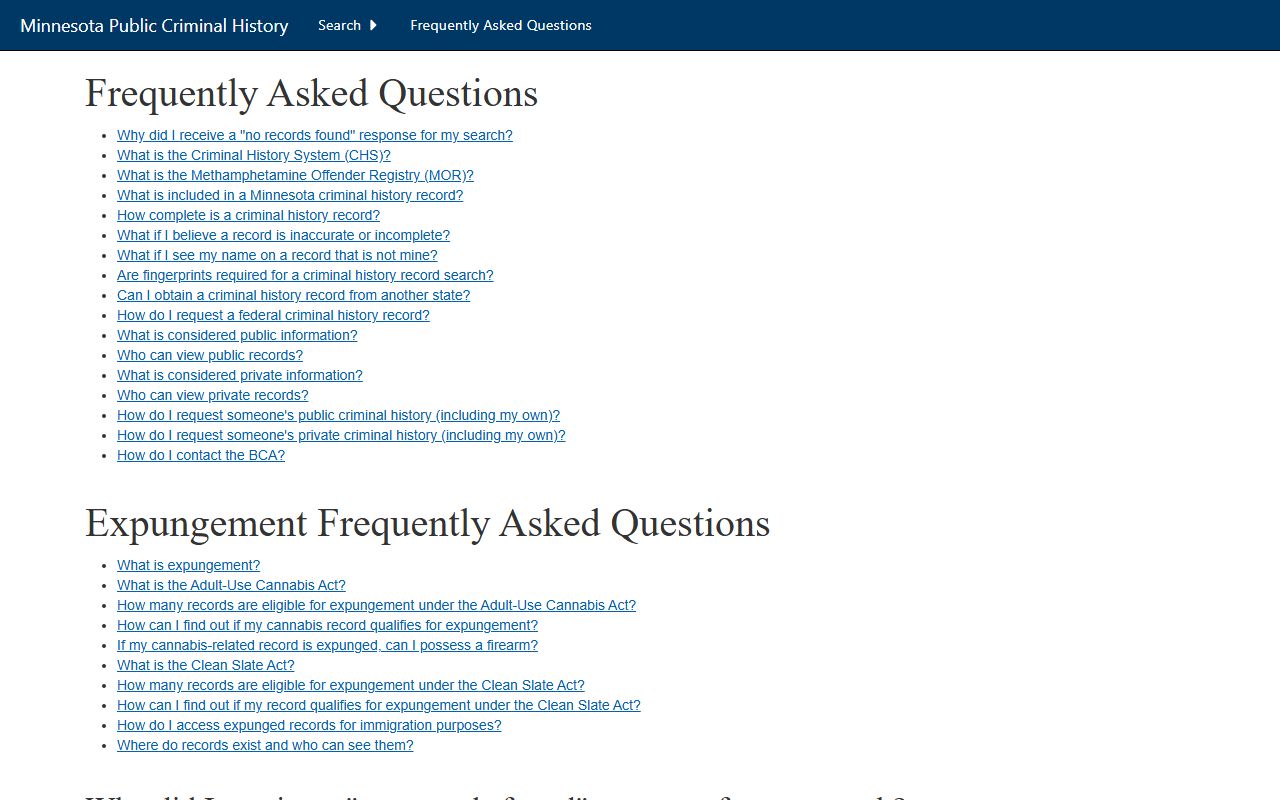
The FAQ source is useful when a name search in court records and a BCA conviction-history search return different results.
Important: Use official court and BCA sources for verification before relying on criminal-history information.
Restricted Grant County Criminal Records
Restricted criminal records include juvenile matters, sealed or expunged records, certain victim-identifying data, personal identifiers, and records withheld by court order. Pending criminal cases with no conviction may not return by defendant-name search in MCRO. That does not mean no case exists. Use case number, citation number, Court Administration, or attorney access when appropriate.
County Attorney records, sheriff arrest records, jail records, body-worn camera video, and court records follow different rules. The Grant County Sheriff's Office body-worn camera project ties some evidence to privacy limits because most body-worn camera video is presumptively private except in certain circumstances. For filed court documents, use MCRO and Court Administration. For arrest or investigation data, use the Sheriff's Office and Data Practices process.