
Grant County District Court Jurisdiction
Minnesota's trial court is District Court. Grant County District Court is part of the Eighth Judicial District and has original jurisdiction over civil, family, probate, juvenile, criminal, and traffic cases filed in Grant County. The county Court Administration page also states that judges hear criminal, family, civil, juvenile, probate, and conciliation matters.
No official Grant County county court, justice court, JP court, municipal court, or separate probate court was located. That means the District Court page is the primary local trial-court profile. Court Administration is the local record-keeper, and MCRO is the public online search system for many district court records.
| Court or Office | Role for Grant County | Address | Phone |
|---|---|---|---|
| Grant County District Court | Trial court for civil, family, probate, juvenile, criminal, traffic, and conciliation cases | 10 Second Street NE, Elbow Lake, MN 56531 | 218-685-7675 |
| Grant County Court Administration | Keeper of District Court records, certified copies, files, exhibits, and public counter | 10 2nd St. NE, Elbow Lake, MN 56531 | 218-685-7675 |
| Minnesota Court of Appeals | Intermediate appellate court for most District Court appeals | Minnesota Judicial Center, St. Paul | Use MJB appellate contacts |
| Minnesota Supreme Court | Highest state court and statewide rules authority | Minnesota Judicial Center, St. Paul | Use MJB appellate contacts |
Grant County Eighth Judicial District
The Eighth Judicial District is the state judicial district that includes Grant County. District Court is managed statewide by the Minnesota Judicial Branch, while each county has a court administrator overseeing day-to-day county operations. Minnesota's hierarchy runs from District Court to the Court of Appeals and then possible Minnesota Supreme Court review.
Cases usually begin and remain in Grant County District Court unless appealed. Criminal complaints, arraignments, bail issues, pleas, motions, trials, dispositions, and sentences are handled in District Court. Civil, family, probate, juvenile, conciliation, and traffic matters are also filed and heard there.
Grant County Courthouse Access
The courthouse is at 10 Second Street NE, Elbow Lake, MN 56531. The Minnesota Judicial Branch lists the court phone as 218-685-7675, fax as 218-736-9929, and Court Administrator Rachel Schmidt. The state court page gives business hours as Monday through Friday, 8:00 a.m. to 4:30 p.m., and notes free parking. The county Court Administration page lists the same phone and fax but gives counter hours of 8:00 a.m. to 4:00 p.m.
Use the more conservative county counter hours for in-person record work and call before visiting late in the day. County pages also identify an after-hours drop box in the courthouse parking lot. The court page includes ADA Accommodation and language-access links for Spanish, Hmong, Somali, and other language needs.
Grant County District Court
Grant County Courthouse
10 Second Street NE
Elbow Lake, MN 56531
218-685-7675
Fax 218-736-9929
Grant County Court Administration
10 2nd St. NE
Elbow Lake, MN 56531
218-685-7675
Mon-Fri 8:00 a.m.-4:00 p.m. per county page
Grant County District Court Cases
District Court records cover the main local court case types. Civil records may include complaints, summonses, motions, orders, judgments, and satisfactions. Criminal records may include complaints, charges, pleas, dispositions, sentences, probation terms, fines, restitution, and warrants. Family records include divorce, custody, support, paternity, and related orders. Probate records include estate, guardianship, conservatorship, and trust matters. Traffic records include citations and petty misdemeanor matters.
| Case Type | Grant County District Court Record Examples |
|---|---|
| Civil and conciliation | Complaints, answers, orders, judgments, satisfactions, and small civil disputes. |
| Criminal | Charges, statute citations, bail, pleas, hearings, disposition, sentence, warrants, and revocations. |
| Family | Divorce, custody, support, paternity, and court-prepared family orders when public. |
| Probate | Wills, petitions, estate administration, guardianship, conservatorship, and trust records. |
| Traffic | Citations, fines, hearings, dispositions, DWI or criminal traffic matters, and failure-to-appear events. |
| Juvenile | Restricted delinquency and child-protection records subject to statute and court rules. |
Grant County Case Flow
Case flow stays inside District Court at the trial level. The exact steps vary by case type, but the local system is not split among lower courts. A criminal case, for example, may begin with a complaint or citation, move to first appearance or arraignment, continue through pretrial motions or plea discussions, and end with dismissal, plea, trial, disposition, sentence, or appeal.
- Filing or charge starts in Grant County District Court.
- Court Administration creates and maintains the case file.
- MCRO may show public case, hearing, document, or judgment information.
- Judges hear motions, trials, pleas, probate hearings, family matters, traffic issues, and other District Court events.
- Appeals generally proceed to the Minnesota Court of Appeals, with possible Minnesota Supreme Court review.
Note: The public daily calendar reflects scheduled courtroom hearings but does not include every matter handled by the court each day.
State District Court vs Federal Court
Grant County District Court is a state trial court. Federal criminal, civil-rights, federal-question, diversity, bankruptcy, and federal enforcement matters use federal courts, not Grant County District Court. Grant County is within the federal District of Minnesota. Bankruptcy cases use the U.S. Bankruptcy Court for the District of Minnesota, and federal appeals go to the U.S. Court of Appeals for the Eighth Circuit.
PACER District of Minnesota lookup is one assigned manifest source for federal District of Minnesota access.
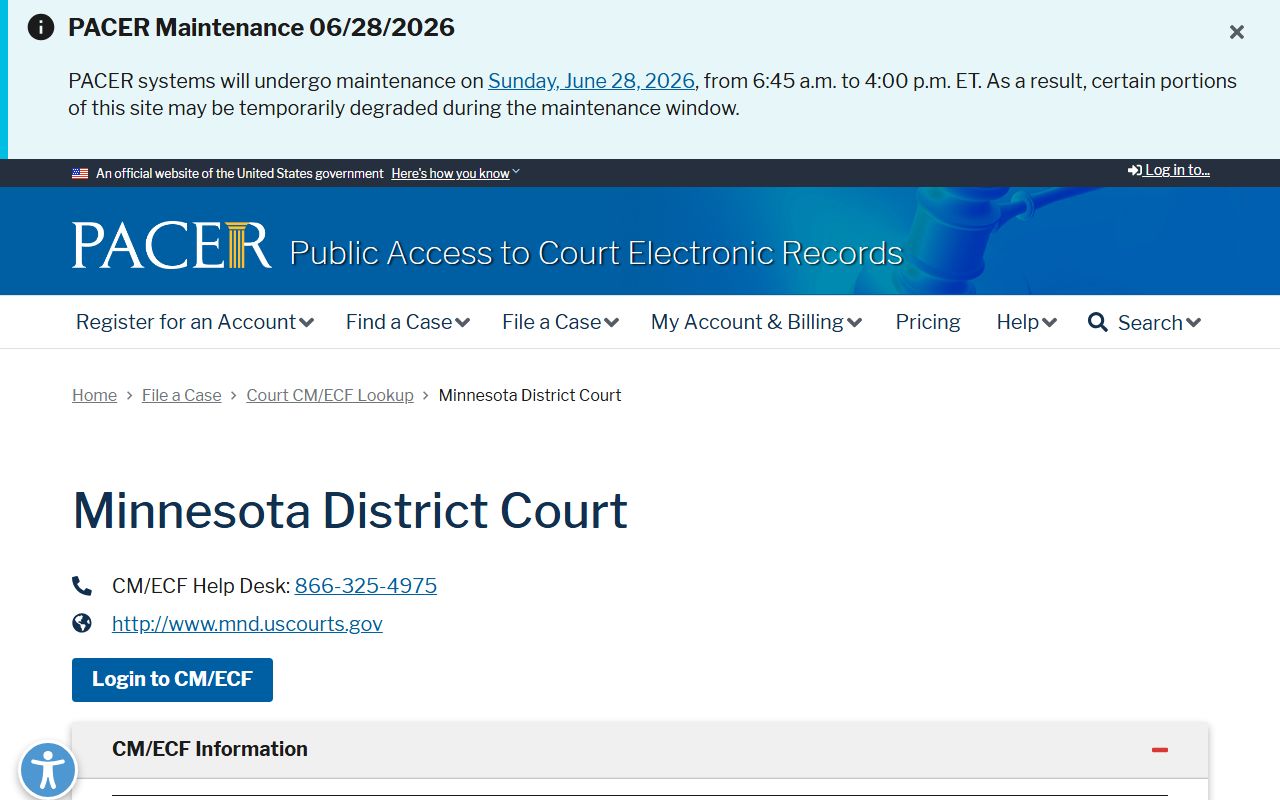
PACER is the federal docket and document system, not the Grant County District Court record system.
The U.S. District Court for the District of Minnesota is another assigned source for the District Court page.
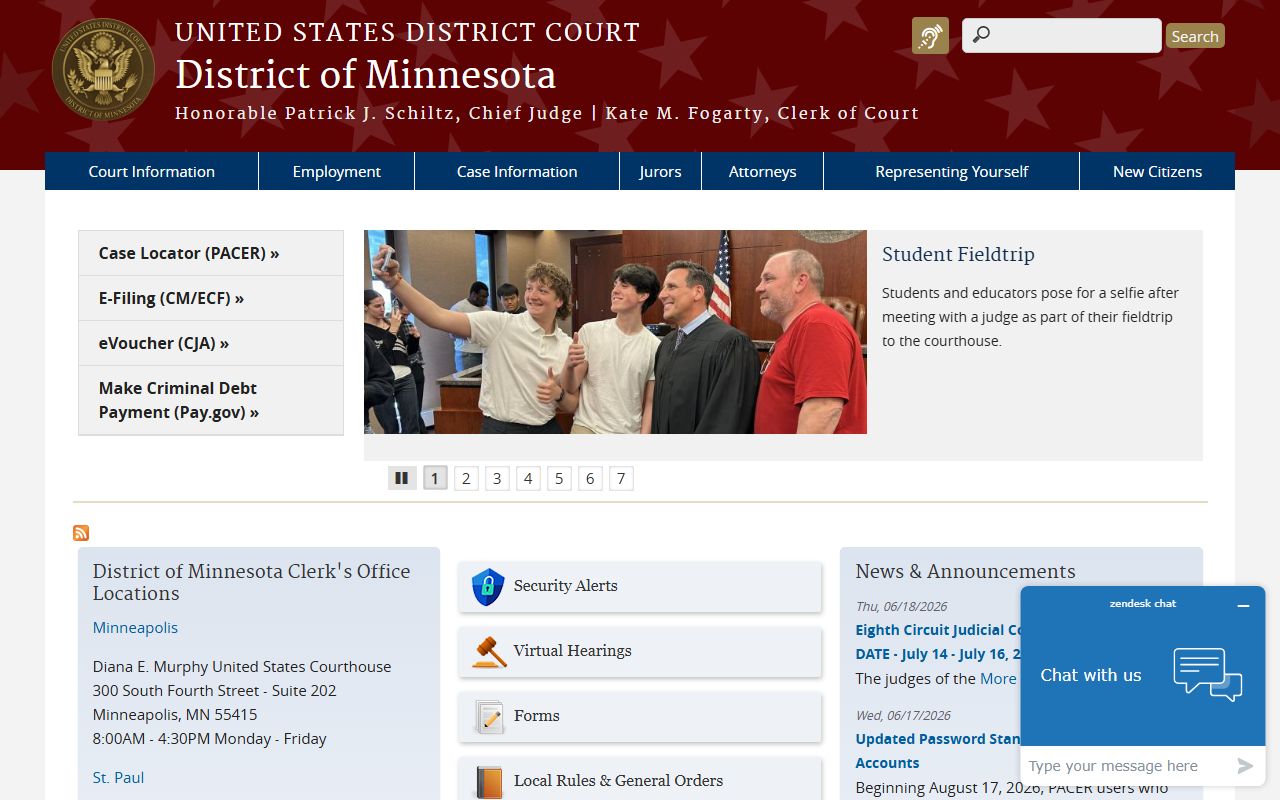
Use the federal District of Minnesota for federal cases and Grant County District Court for local state cases.
Bankruptcy and Appeals
Federal bankruptcy is separate from Grant County District Court. A local civil judgment, divorce obligation, probate debt, or criminal restitution issue may be relevant to a person, but a bankruptcy case itself belongs in the federal bankruptcy court system. The U.S. Bankruptcy Court for the District of Minnesota is an assigned manifest source.
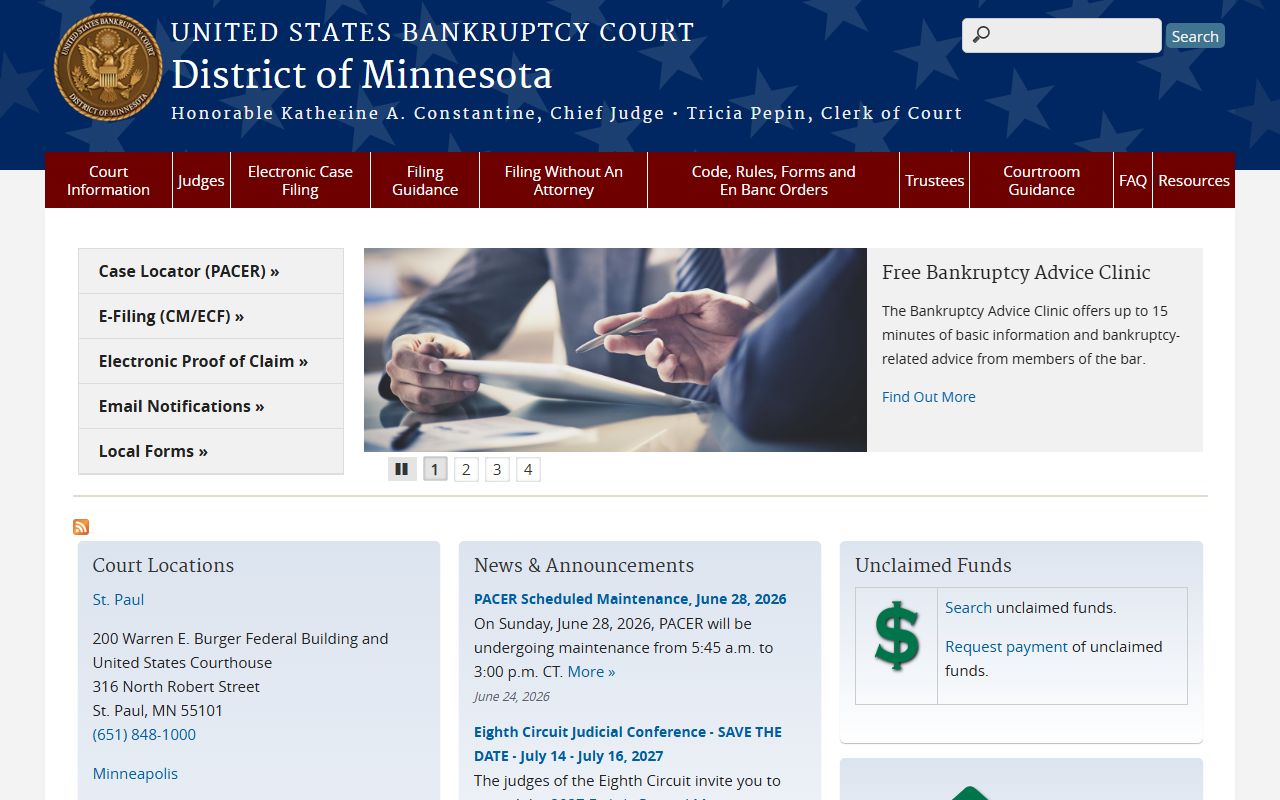
Bankruptcy documents should not be requested from Grant County Court Administration unless a separate state court case document is needed.
Federal appeals from the federal district and bankruptcy appellate process go to the Eighth Circuit Court of Appeals, not the Minnesota Court of Appeals.
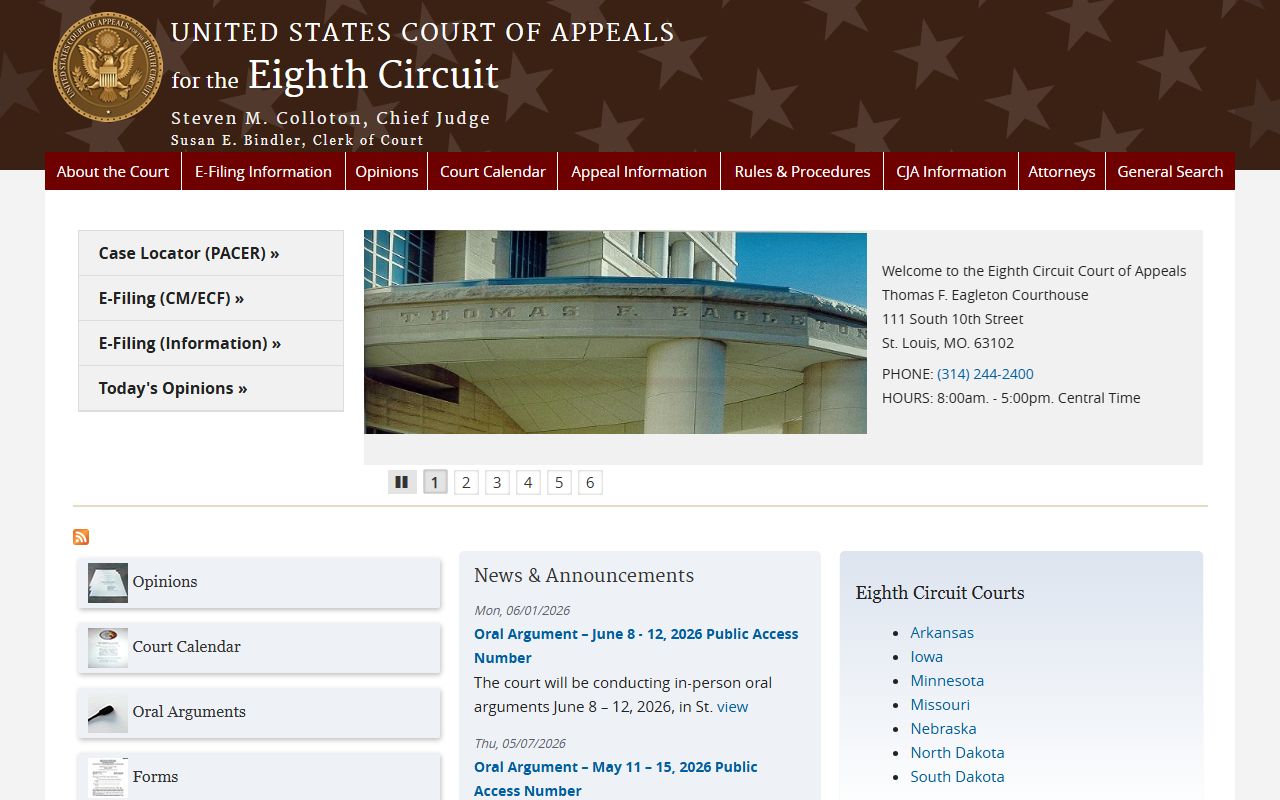
Minnesota state appeals and federal appeals use different appellate systems, even when both involve people or events from Grant County.
Historic Grant County Courthouse
Grant County's court history is unusually tied to the county-seat dispute between Elbow Lake and Herman. The first courthouse opened in Elbow Lake in 1878. A.C. Earsley and H.H. Wilson of Alexandria built the two-story building for $1,225. It had four rooms and a hall on the first floor, with a second-floor courtroom reached by an outside stairway. Cases reportedly were taken to Douglas County until 1883.
In 1881, Herman persuaded the Legislature to award it the county seat subject to election approval. Herman won by 70 votes, and citizens removed county records from Elbow Lake. Elbow Lake later proved fraud, the election was voided, and the records were returned. Knute Nelson represented Elbow Lake and later became a congressman, Minnesota governor, and U.S. senator. L.W. Collins represented Herman and later became a Minnesota Supreme Court justice.
The present courthouse was dedicated in 1906. Bell & Detweiler designed the Beaux Arts building, Prince Construction built it for $60,202 including heating and plumbing, and Oden J. Oyen was paid $3,000 for interior murals and artwork. The building is 97 by 75 feet and rises 102.5 feet to the top of the tower. Official details include Port Wing brownstone, a slate roof, terrazzo floors, pink Tennessee marble wainscoting, oak fixtures, a muralled dome, and a sealed stained-glass skylight.
Grant County District Court Records
Grant County District Court records can be searched through MCRO Case Search, Document Search, Hearing Search, and Judgment Search. Case Search accepts person name, business name, attorney name, case number, citation number, and attorney bar number searches. Document Search requires the exact case number. Hearing Search can locate scheduled hearings by party, business, case number, judicial officer, attorney name, or attorney bar number. Judgment Search is used for docketed money judgments by debtor name.
The Grant County daily calendar is a public calendar PDF. Research found fields such as Party Name, Hearing Location, Hearing Date Time, Judicial Officer, Hearing Type, Connection Type, and Case Number. The calendar warning says scheduled courtroom hearings are shown, but not every matter handled by the court each day appears. Confidential cases and matters not remotely accessible under Rule 8 are omitted, so a missing calendar entry should not be treated as proof that a hearing was cancelled.
| Search Need | District Court Channel | Limit |
|---|---|---|
| Case detail | MCRO Case Search | Unofficial and subject to remote-access limits. |
| Public documents | MCRO Document Search | Requires exact case number and only available public documents. |
| Hearing date | MCRO Hearing Search or daily calendar | Calendar does not show every matter. |
| Certified copy | Court Administration | MCRO cannot certify records. |
| County agency data | Grant County Data Practices Policy route | Separate from Judicial Branch court records. |
No Grant County Lower Courts
The State Court Structure Map lists no lower courts for Grant County. That finding affects traffic, probate, criminal, family, and civil searches. A ticket or petty misdemeanor is not routed to a municipal court found in the research. Probate is not routed to a separate probate court. Criminal charges after arrest are filed into District Court when a court case opens. This unified structure makes Court Administration the local certified-copy source across case types.
Some record categories still involve non-court offices. The Sheriff's Office handles jail custody, warrants, prisoner transport, civil process, central records keeping, and law-enforcement data. The Recorder handles marriage certificates, marriage license processing, real estate documents, military discharges, notary filings, minister credentials, and passport services. Those office distinctions should be preserved even though all three offices are clustered at the same Grant County courthouse campus.